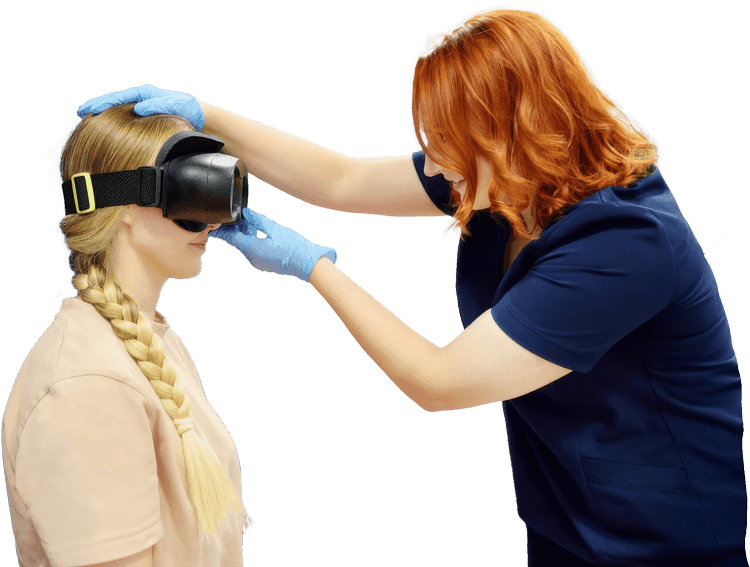
This test assesses the vestibular system’s ability to maintain visual stabilization and clarity during motion. It is particularly important for evaluating the VOR, a reflex mechanism that enables the eyes to remain focused on a fixed point during head movements, preventing blurriness while the head is in motion.
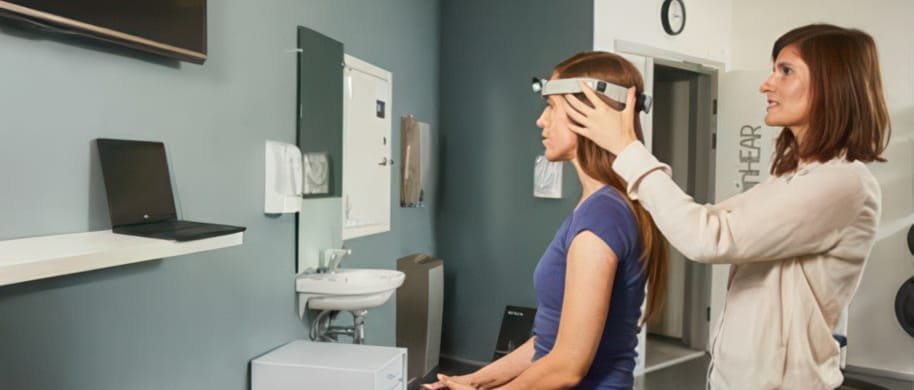
Purpose and Procedure of the Dynamic Visual Acuity Test
The DVA test measures whether a patient’s visual sharpness changes while their head is moved at a specific speed. The test generally proceeds as follows:
- Head Movements:
The patient’s head is moved quickly forward, backward, or to the sides while the eyes remain focused on a target displayed on a static screen. - Visual Acuity Assessment:
During the test, the patient is shown specific letters or symbols and is asked to identify them. Observations are made to determine if visual sharpness decreases while the head is in motion. - Comparison:
The visual acuity during head movements is compared to the static visual acuity when the head is stationary. A significant difference between dynamic and static acuity may indicate vestibular dysfunction.

Importance of the DVA Test in Vestibular Evaluation
The vestibular system plays a critical role in stabilizing visual information during balance and head movements. If there is an issue with the vestibular system, vision may become blurry during head movements. This can result in symptoms such as balance loss, an increased risk of falling, and motion-triggered dizziness during everyday activities.
The DVA test is valuable for:
- Assisting in the diagnosis of vestibular disorders.
- Identifying conditions affecting vestibular system functionality, such as vestibular neuritis or labyrinthitis.
- Evaluating the causes of symptoms like dizziness, imbalance, or visual blurriness.
Relationship Between the Dynamic Visual Acuity Test and VOR
If the VOR fails to keep the eyes fixed on a target during head movements, the patient’s visual acuity decreases with motion. This reduction indicates impaired VOR function. The DVA test identifies this deficiency and helps guide treatment planning. For example, vestibular rehabilitation may be recommended to improve the patient’s VOR function.
The DVA test is a critical tool for vestibular assessment, aiding both in diagnosis and in monitoring the effectiveness of treatment.