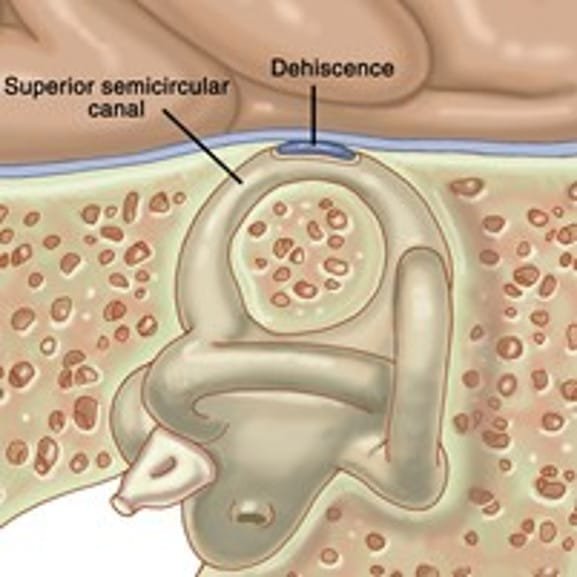
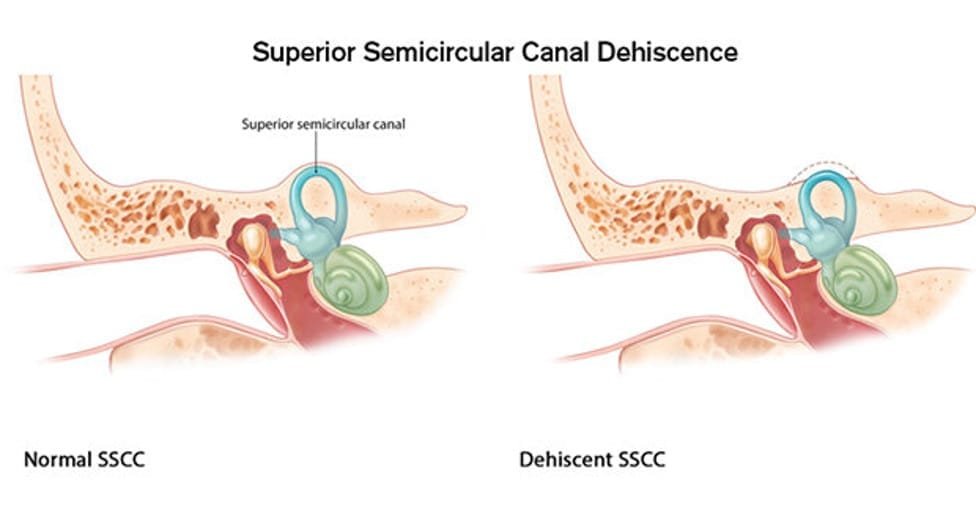
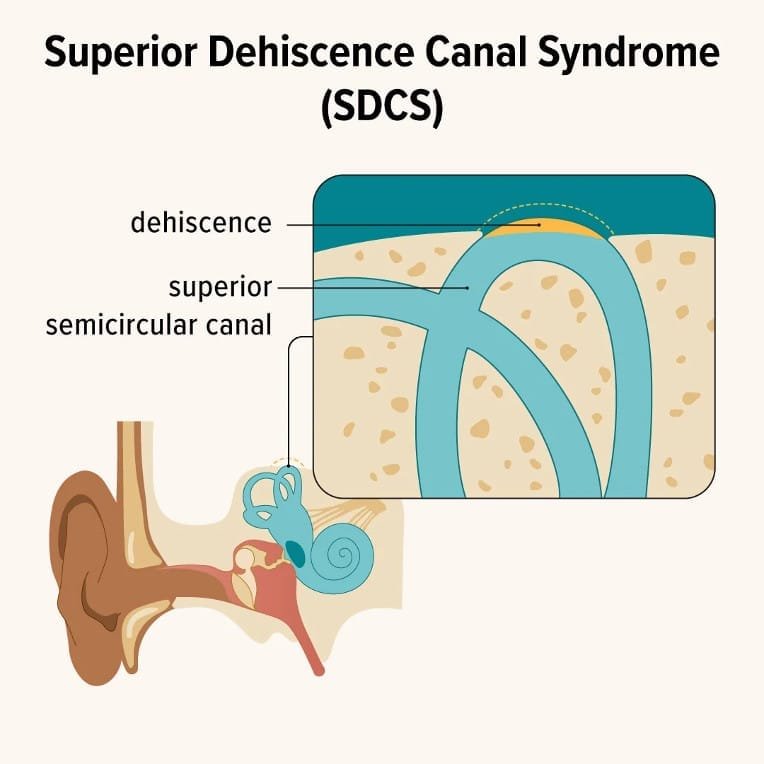
Superior Semicircular Canal Dehiscence (SSCD) is a condition characterized by thinning or an opening in the bony layer above the superior semicircular canal in the inner ear. This abnormality can affect hearing and balance systems.
Symptoms of SSCD
- Sound-induced dizziness (Tullio phenomenon): Feeling dizzy when exposed to loud sounds.
- Pressure-induced dizziness (Hennebert sign): Dizziness triggered by activities that increase intracranial pressure, such as sneezing, coughing, or straining.
- Autophony: Hearing one’s body sounds excessively loudly, such as heartbeats, breathing, or footsteps.
- Imbalance: A sensation of unsteadiness while walking.
- Hearing loss: Typically conductive hearing loss.
- Tinnitus: Ringing in one or both ears.
- Headache and fullness: A feeling of pressure or fullness in the ear, sometimes accompanied by headaches.
Causes of SSCD
- Congenital: Some individuals may naturally have thinner bone over the canal, which can progress over time.
- Trauma: Head injuries or exposure to high pressure.
- Surgery: It can occur after middle ear surgeries.
- Aging: Natural thinning of the bone tissue over time.
How is SSCD Diagnosed?
- Clinical evaluation: Assessment of symptom triggers and severity.
- Audiometry: Hearing tests to assess hearing loss and autophony.
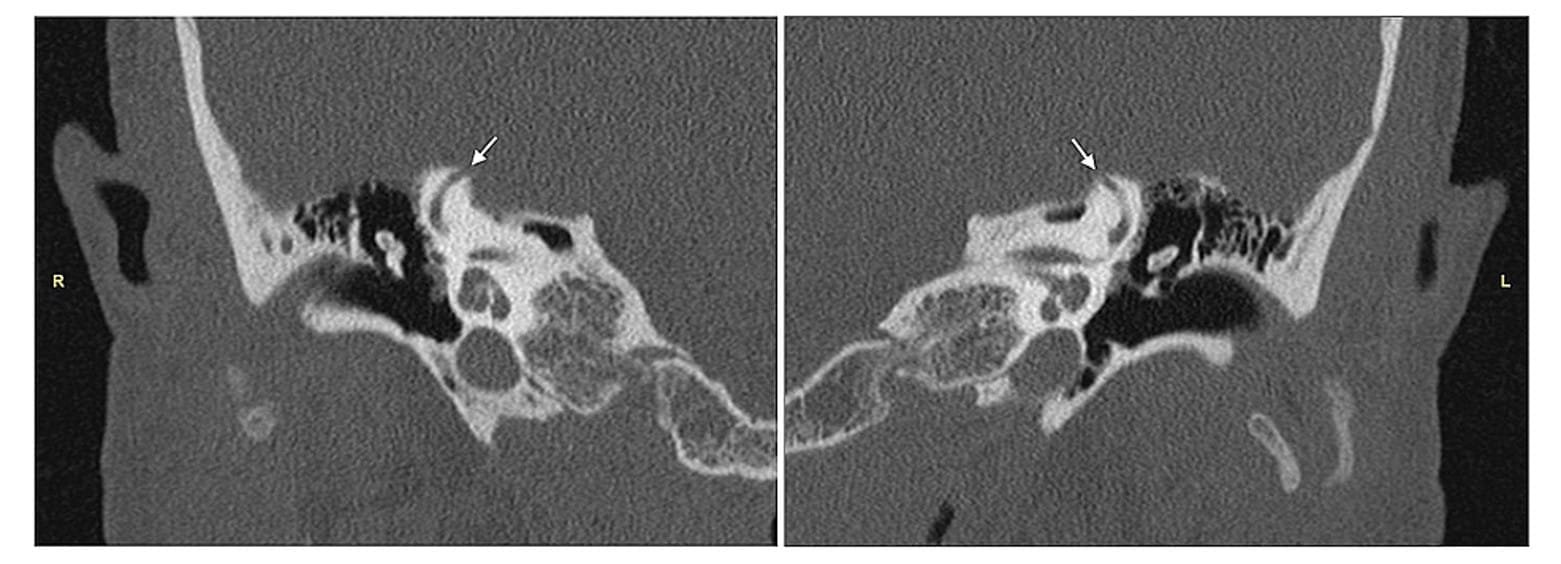
- CT Scan: Detailed imaging of the inner ear to detect bony defects.
- Vestibular tests:
- Vestibular evoked myogenic potentials (VEMP): To identify hypersensitivity.
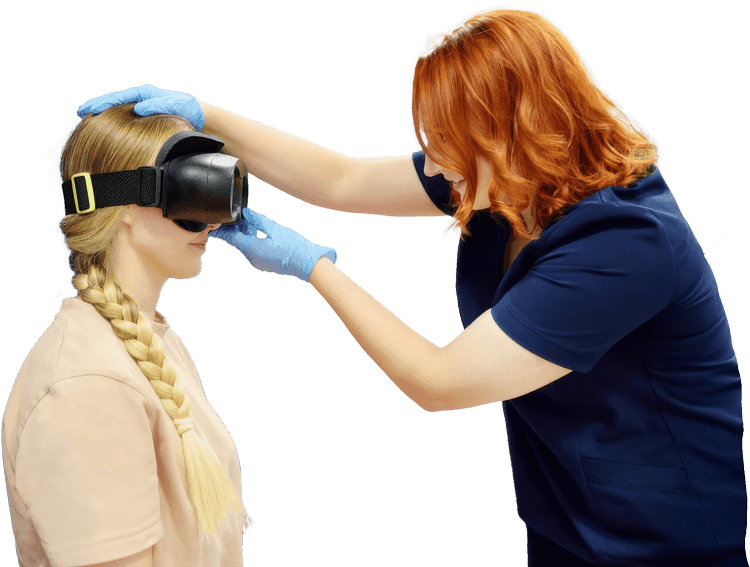
- Video head impulse test (vHIT): To evaluate vestibular canal function.
Treatment Options for SSCD
Treatment depends on the severity of symptoms:
- Monitoring: For mild symptoms or cases not significantly impacting quality of life, regular follow-ups are recommended.
- Surgical treatment: Procedures such as superior canal plugging or resurfacing to close the defect.
- Lifestyle changes: Avoiding triggers like loud sounds or activities that increase intracranial pressure.
Effectiveness of Surgical Treatment
Surgical treatment often significantly alleviates symptoms. However, minor side effects such as slight imbalance or hearing changes may occur post-surgery. Choosing an experienced surgeon helps minimize risks.
What Happens if SSCD is Left Untreated?
SSCD does not typically progress but may lead to increasingly bothersome symptoms, limiting daily activities, especially those requiring stable hearing and balance.
Who is at Higher Risk for SSCD?
- Most commonly affects middle-aged individuals.
- Those with chronic sinusitis or frequent head trauma may have an increased risk.
- Rarely, a genetic predisposition may be present.
Can SSCD Be Prevented?
Since SSCD is either congenital or develops over time, prevention is challenging. However, avoiding head trauma and sudden pressure changes can reduce the risk.
Living with SSCD
- Avoid activities or situations that trigger symptoms, such as loud noises or pressure changes.
- Use earplugs to reduce sensitivity to environmental sounds.
- Regularly consult an ENT specialist to monitor and manage symptoms.
Can SSCD Be Confused with Other Conditions?
Yes, SSCD symptoms may overlap with:
- BPPV (Benign Paroxysmal Positional Vertigo)
- Meniere’s Disease
- Perilymph Fistula
- Vestibular Migraine
Accurate diagnosis requires specialized tests and imaging.
Impact of SSCD on Quality of Life
SSCD can disrupt daily activities due to hearing and balance issues. However, with proper diagnosis and treatment, symptoms can be managed, and quality of life can improve significantly.
SSCD is a complex condition, and consulting an ENT specialist is essential for proper management. If you are experiencing symptoms, a comprehensive evaluation and personalized treatment plan are highly recommended.