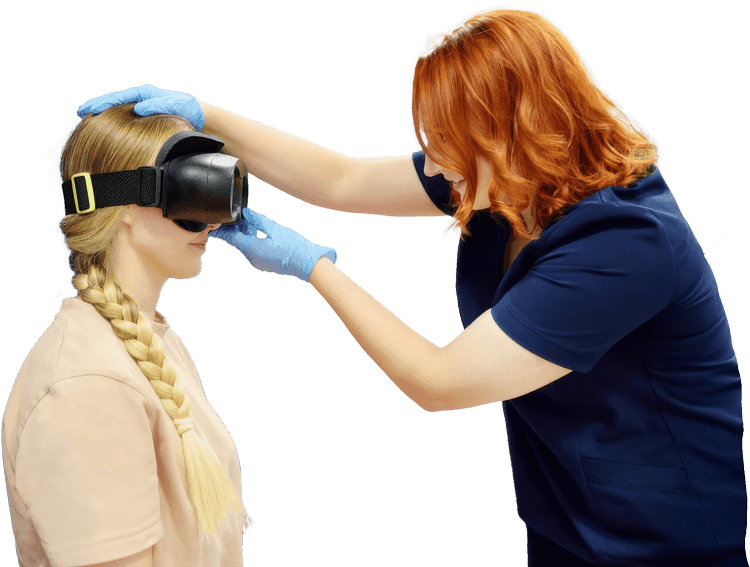
As part of vestibular evaluation, this test is particularly used to assess the functions of the saccule (a component of the balance organ in the inner ear) and the inferior vestibular nerve.
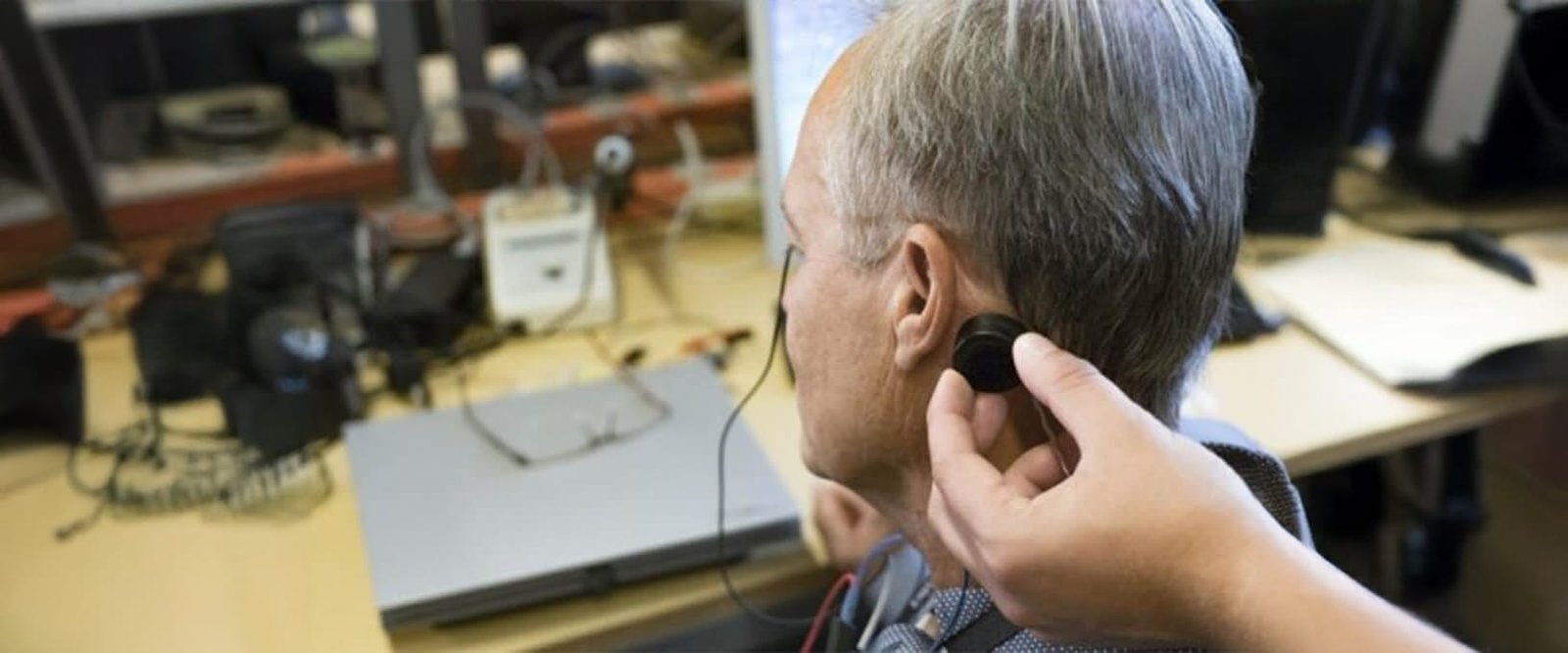
How the VEMP Test Works
The VEMP test is performed using stimuli such as sound or vibration. During the test, high-frequency sound waves are delivered to the ears, which stimulate the saccule and vestibular nerve. The reflex responses triggered in the muscles (typically the neck or eye muscles) are then measured. The VEMP test is divided into two main types:
- cVEMP (Cervical VEMP):
Measures responses from neck muscles and evaluates the saccule and inferior vestibular nerve functions. - oVEMP (Ocular VEMP):
Measures responses from the muscles around the eyes and evaluates the utricle and superior vestibular nerve functions.
Importance of the VEMP Test in Vestibular Evaluation
The VEMP test is used to investigate the causes of vestibular symptoms such as dizziness, imbalance, and vertigo. It provides:
- Evaluation of the otolith organs (saccule and utricle) in the inner ear.
- Detection of functional impairments in specific branches of the vestibular nerves (inferior and superior).
- Diagnostic support for vestibular disorders such as Meniere’s disease, vestibular neuritis, otosclerosis, and superior canal dehiscence syndrome.
Unlike traditional hearing tests, the VEMP test gives detailed information about balance functions and is highly valuable for identifying damage or loss of function in specific areas of the vestibular system.
How the VEMP Test is Conducted?
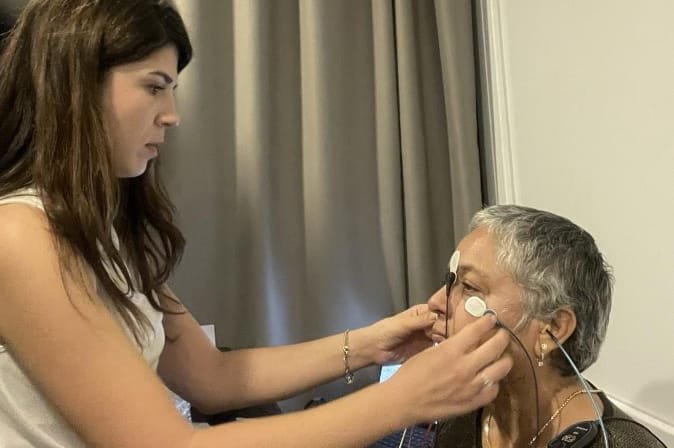
1. Preparation Stage:
- The patient is made comfortable in a quiet environment where external noise is minimized.
- The areas where electrodes will be placed (face, neck, or around the eyes) are cleaned. Surface electrodes (small adhesive pads) are then attached.
- For cVEMP (neck muscles), electrodes are placed over the neck muscles. For oVEMP (eye muscles), electrodes are placed around the eyes.
2. Starting the Test:
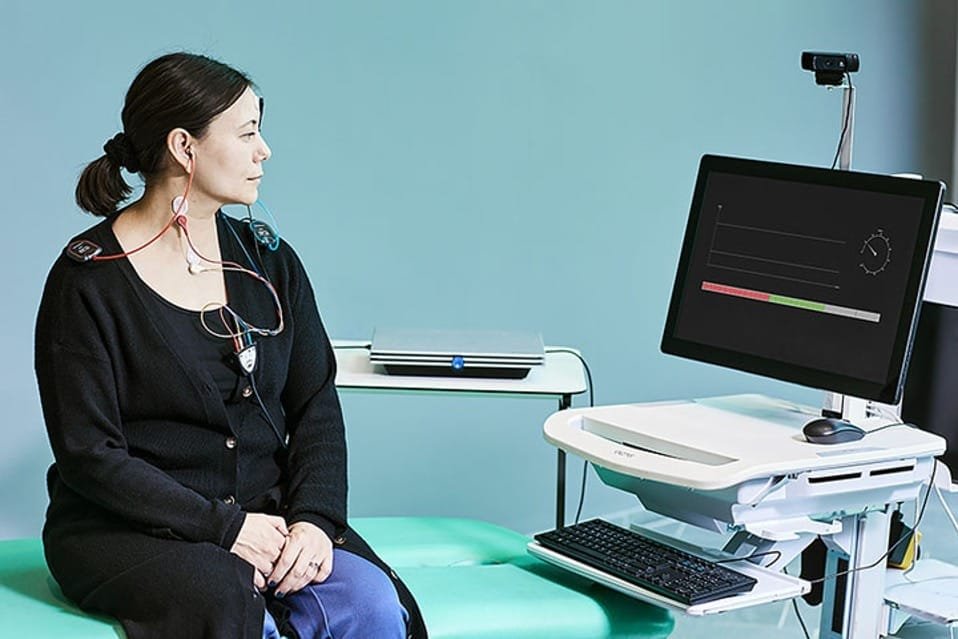
- The patient wears headphones, and sound stimuli at specific frequencies and intensities are delivered through them.
- These stimuli trigger reflex responses in the saccule or utricle of the inner ear. The response travels through the vestibular nerves to the muscles, generating short-lived electrical activity.
- This electrical activity is recorded from the neck muscles (cVEMP) or the eye muscles (oVEMP).
3. Measurement and Analysis:
- During the test, electrodes measure the reflex responses in the muscles caused by sound stimuli.
- These responses are recorded as waveforms on a computer for analysis.
- The characteristics of the waveforms, such as amplitude, symmetry, and shape, are evaluated. Absent or abnormal responses may indicate a dysfunction in the vestibular system.
When is the VEMP Test Used?
The VEMP test is particularly useful in evaluating the following conditions:
- Meniere’s Disease:
In this condition, which involves disrupted fluid balance in the inner ear, cVEMP can evaluate saccule function. Saccule damage, common in Meniere’s disease, often alters VEMP responses. - Vestibular Neuritis:
This inflammation of the vestibular nerve can be assessed using oVEMP, which evaluates utricle and superior vestibular nerve function. - Superior Canal Dehiscence (SCD) Syndrome:
A condition caused by bone thinning in the superior semicircular canal. This syndrome often presents with hypersensitivity, and VEMP helps in its diagnosis. - Otosclerosis:
An abnormal bone growth in the inner ear, where the VEMP test can indicate how balance functions are affected.
Interpreting VEMP Test Results
- Normal Response:
A recorded waveform indicates a healthy vestibular system. Symmetrical responses in both ears are particularly important. - Weak or Absent Response:
If no electrical response is detected or if the response is significantly weak, it may suggest a loss of function in the relevant vestibular structure (e.g., saccule or utricle). - Asymmetrical Responses:
Significant differences between the responses of the right and left ears can indicate an issue with one side of the vestibular system.
After the VEMP Test
The VEMP test is typically quick and painless. While the patient may feel mild discomfort during the procedure, there are no lasting side effects after the test. Based on the results, an ENT specialist can provide a diagnosis and recommend appropriate treatment options.